Brand Name

Xifaxan

Generic Name
Rifaximin
View Brand Information
FDA approval date: July 25, 2004
Classification: Rifamycin Antibacterial
Form: Tablet

What is Xifaxan (Rifaximin)?

To reduce the development of drug-resistant bacteria and maintain the effectiveness of XIFAXAN and other antibacterial drugs, XIFAXAN when used to treat infection should be used only to treat or prevent infections that are proven or strongly suspected to be caused by susceptible bacteria. When culture and susceptibility information are available, they should be considered in selecting or modifying antibacterial therapy. In the absence of such data, local epidemiology and susceptibility patterns may contribute to the empiric selection of therapy. XIFAXAN is a rifamycin antibacterial indicated for: Treatment of travelers’ diarrhea caused by noninvasive strains of Escherichia coli in adult and pediatric patients 12 years of age and older.
Save this treatment for later
Sign Up
Not sure about your diagnosis?
Check Your Symptoms
Tired of the same old research?
Check Latest Advances

Related Clinical Trials

Open-Label, Randomized, Pharmacokinetic Study of Single-Dose Modified Release Glipizide in Healthy Volunteers

Summary: In vivo drug dissolution in the gastrointestinal (GI) tract is largely unmeasured. The purpose of this clinical study is to evaluate the in vivo drug dissolution and systemic absorption of modified release formulations of the BCS Class II drug Glipizide by direct sampling of stomach and small intestinal luminal content, blood, urine and feces. Expanding current knowledge of drug dissolution in viv...

Efficacy and Safety of Rifaximin in Treating Metabolic Associated Fatty Liver Disease: A Pilot Trial

Objective: to evaluate the efficacy and safety of rifaximin in the treatment of metabolic-associated fatty liver disease (MAFLD), and investigate the underlying mechanisms by which rifaximin influence MAFLD progression. Target Population: patients diagnosed with MAFLD. Intervention: this single-center, single-arm exploratory study will enroll up to 40 eligible MAFLD patients who meet the inclusion criteria, ...

An Open-label Single-Arm Phase 3 Study to Evaluate the Efficacy, Safety, Tolerability, Pharmacokinetics, and Immunogenicity of Vedolizumab Intravenous in the Treatment of Pediatric Subjects With Active Chronic Pouchitis

Summary: When some people have their large bowel removed, a surgeon can make a pouch from part of the small bowel to connect it to the back passage (anus). Pouchitis is when the pouch becomes inflamed (swollen) or infected. The main aim of this study is to find out if vedolizumab improves pouchitis symptoms and pouch inflammation. Other aims include to find out if vedolizumab is well tolerated and if it ca...

Brand Information

XIFAXAN (rifaximin)
1INDICATIONS AND USAGE
To reduce the development of drug-resistant bacteria and maintain the effectiveness of XIFAXAN and other antibacterial drugs, XIFAXAN when used to treat infection should be used only to treat or prevent infections that are proven or strongly suspected to be caused by susceptible bacteria. When culture and susceptibility information are available, they should be considered in selecting or modifying antibacterial therapy. In the absence of such data, local epidemiology and susceptibility patterns may contribute to the empiric selection of therapy.
1.1Travelers’ Diarrhea
XIFAXAN is indicated for the treatment of travelers’ diarrhea (TD) caused by noninvasive strains of
Limitations of Use
XIFAXAN should not be used in patients with diarrhea complicated by fever or blood in the stool or diarrhea due to pathogens other than
1.2Hepatic Encephalopathy
XIFAXAN is indicated for reduction in risk of overt hepatic encephalopathy (HE) recurrence in adults.
In the placebo-controlled trial of XIFAXAN for HE, 91% of the patients were using lactulose concomitantly. Differences in the treatment effect of those patients not using lactulose concomitantly could not be assessed.
XIFAXAN has not been studied in patients with MELD (Model for End-Stage Liver Disease) scores >25, and only 8.6% of patients in the placebo-controlled trial had MELD scores over 19. There is increased systemic exposure in patients with more severe hepatic dysfunction
1.3Irritable Bowel Syndrome with Diarrhea
XIFAXAN is indicated for the treatment of irritable bowel syndrome with diarrhea (IBS-D) in adults.
2DOSAGE FORMS AND STRENGTHS
XIFAXAN is a pink-colored biconvex tablet and is available in the following strengths:
  • 200 mg – a round tablet debossed with “Sx” on one side and plain on the other.
  • 550 mg – an oval tablet debossed with “rfx” on one side and plain on the other.
3CONTRAINDICATIONS
XIFAXAN is contraindicated in patients with a hypersensitivity to rifaximin, any of the rifamycin antimicrobial agents, or any of the components in XIFAXAN. Hypersensitivity reactions have included exfoliative dermatitis, angioneurotic edema, and anaphylaxis
4ADVERSE REACTIONS
The following clinically significant adverse reactions are described elsewhere in labeling:
  • Clostridium difficile-associated diarrhea [see Warnings and Precautions (
4.1Clinical Trials Experience
Because clinical trials are conducted under widely varying conditions, adverse reaction rates observed in the clinical trials of a drug cannot be directly compared to rates in the clinical trials of another drug and may not reflect the rates observed in practice.
Travelers’ Diarrhea
The safety of XIFAXAN 200 mg taken three times a day was evaluated in patients with travelers’ diarrhea consisting of 320 patients in two placebo-controlled clinical trials with 95% of patients receiving three or four days of treatment with XIFAXAN. The population studied had a mean age of 31.3 (18-79) years of which approximately 3% were ≥65 years old, 53% were male and 84% were White, 11% were Hispanic.
Discontinuations due to adverse reactions occurred in 0.4% of patients. The adverse reactions leading to discontinuation were taste loss, dysentery, weight decrease, anorexia, nausea and nasal passage irritation.
The adverse reaction that occurred at a frequency ≥2% in XIFAXAN-treated patients (n=320) at a higher rate than placebo (n=228) in the two placebo-controlled trials of TD was:
  • headache (10% XIFAXAN, 9% placebo)
Hepatic Encephalopathy
Trial 1
The data described in Table 1 reflect exposure to XIFAXAN in 348 patients, including 265 exposed for 6 months and 202 exposed for more than a year (mean exposure was 364 days). The safety of XIFAXAN 550 mg taken two times a day for reducing the risk of overt HE recurrence in adult patients was evaluated in a 6-month placebo-controlled clinical trial (n=140) and in a long-term follow-up study (n=280) [see Clinical Studies ( . The population studied had a mean age of 56 (range: 21 to 82) years; approximately 20% of the patients were ≥65 years old, 61% were male, 86% were White, and 4% were Black. Ninety-one percent of patients in the trial were taking lactulose concomitantly. The most common adverse reactions that occurred at an incidence ≥5% and at a higher incidence in XIFAXAN-treated subjects than in the placebo group in the 6-month trial are provided in Table 1.
Table 1: Common Adverse Reactions*from a Clinical Study of XIFAXAN in Adult Patients with Hepatic Encephalopathy (Trial 1)
*Adverse reactions that occurred in ≥5% of XIFAXAN-treated patients and greater than in patients who received placebo
Trial 2
The data described in Table 2 reflect exposure to XIFAXAN in 221 of 222 randomized subjects, exposed for a median duration of 169 days, with 113 exposed to XIFAXAN monotherapy and 108 exposed to XIFAXAN added onto lactulose in a six-month active-controlled trial [see Clinical Studies ( The population studied had a mean age of 58; approximately 63% of subjects were male. The most common adverse reactions that occurred at an incidence ≥5% are provided in Table 2.
Table 2: Common Adverse Reactions*from a Clinical Study of XIFAXAN + Lactulose Compared to XIFAXAN Monotherapy in Adult Patients with Hepatic Encephalopathy (Trial 2)
* Adverse reactions that occurred in ≥5% of patients receiving XIFAXAN in either treatment group
Irritable Bowel Syndrome with Diarrhea
The safety of XIFAXAN for the treatment of IBS-D was evaluated in 3 placebo-controlled studies in which 952 patients were randomized to XIFAXAN 550 mg three times a day for 14 days. Across the 3 studies, 96% of patients received at least 14 days of treatment with XIFAXAN. In Trials 1 and 2, 624 patients received only one 14-day treatment. Trial 3 evaluated the safety of XIFAXAN in 328 patients who received 1 open-label treatment and 2 double-blind repeat treatments of 14 days each over a period of up to 46 weeks. The combined population studied had a mean age of 47 (range: 18 to 88) years of whom approximately 11% of the patients were
The adverse reaction that occurred at a frequency ≥2% in XIFAXAN-treated patients at a higher rate than placebo in Trials 1 and 2 for IBS-D was:
  • nausea (3% XIFAXAN, 2% placebo)
The adverse reactions that occurred at a frequency ≥2% in XIFAXAN-treated patients (n=328) at a higher rate than placebo (n=308) in Trial 3 for IBS-D during the double-blind treatment phase were:
  • ALT increased (XIFAXAN 2%, placebo 1%)
  • nausea (XIFAXAN 2%, placebo 1%)
Less Common Adverse Reactions
The following adverse reactions, presented by body system, were reported in less than 2% of patients in clinical trials of TD and IBS-D and in less than 5% of patients in clinical trials of HE:
Hepatobiliary disorders:Clostridium colitis
Investigations:Increased blood creatine phosphokinase
Musculoskeletal and connective tissue disorders:Myalgia
4.2Postmarketing Experience
The following adverse reactions have been identified during post-approval use of XIFAXAN. Because these reactions are reported voluntarily from a population of unknown size, estimates of frequency cannot be made. These reactions have been chosen for inclusion due to either their seriousness, frequency of reporting, or causal connection to XIFAXAN.
Infections and Infestations
Cases of
Hypersensitivity Reactions
Exfoliative dermatitis, rash, angioneurotic edema (swelling of face and tongue and difficulty swallowing), urticaria, flushing, pruritus and anaphylaxis have been reported. These events occurred as early as within 15 minutes of drug administration.
Musculoskeletal and Connective Tissue Disorders
Cases of rhabdomyolysis have been reported in patients with cirrhosis, with and without concomitant statin use.
Severe Cutaneous Adverse Reactions
Severe cutaneous adverse reactions, including Stevens-Johnson syndrome (SJS) and toxic epidermal necrolysis (TEN), have been reported in association with the use of rifaximin in patients with cirrhosis. Discontinue rifaximin at the first signs or symptoms of severe cutaneous adverse reactions or other signs of hypersensitivity and conduct a clinical evaluation.
5OVERDOSAGE
No specific information is available on the treatment of overdosage with XIFAXAN. In clinical studies at doses higher than the recommended dose (greater than 600 mg per day for TD, greater than 1,100 mg per day for HE or greater than 1,650 mg per day for IBS-D), adverse reactions were similar in subjects who received doses higher than the recommended dose and placebo. In the case of overdosage, discontinue XIFAXAN, treat symptomatically, and institute supportive measures as required.
6DESCRIPTION
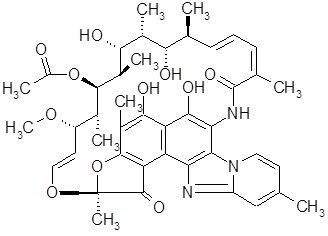
XIFAXAN tablets contain rifaximin, a non-aminoglycoside semi-synthetic, nonsystemic antibiotic derived from rifamycin SV. Rifaximin is a structural analog of rifampin. The chemical name for rifaximin is (2
chem structure
XIFAXAN tablets for oral administration are film-coated and contain 200 mg or 550 mg of rifaximin.
Inactive ingredients:
Each 200 mg tablet contains colloidal silicon dioxide, disodium edetate, glycerol palmitostearate, hypromellose, microcrystalline cellulose, propylene glycol, red iron oxide, sodium starch glycolate, talc, and titanium dioxide.
Each 550 mg tablet contains colloidal silicon dioxide, glycerol palmitostearate, microcrystalline cellulose, polyethylene glycol/macrogol, polyvinyl alcohol, red iron oxide, sodium starch glycolate, talc, and titanium dioxide.
7HOW SUPPLIED/STORAGE AND HANDLING
The 550 mg tablet is a pink-colored, oval, biconvex tablet with “rfx” debossed on one side and plain on the other. It is available in the following presentations:
Bottles of approximately 360 tablets, NDC 55154-6777-8
Storage
Store XIFAXAN Tablets at 20° to 25°C (68° to 77°F); excursions permitted to 15° to 30°C (59° to 86°F) [see USP Controlled Room Temperature].
8PATIENT COUNSELING INFORMATION
Persistent Diarrhea
For those patients being treated for travelers’ diarrhea, discontinue XIFAXAN if diarrhea persists more than 24-48 hours or worsens. Advise the patient to seek medical care for fever and/or blood in the stool
Clostridium difficile-Associated Diarrhea
Clostridium difficile-associated diarrhea (CDAD) has been reported with use of nearly all antibacterial agents, including XIFAXAN, and may range in severity from mild diarrhea to fatal colitis. Treatment with antibiotics alters the normal flora of the colon which may lead to C. difficile. Patients can develop watery and bloody stools (with or without stomach cramps and fever) even as late as two or more months after having taken the last dose of the antibiotic. If diarrhea occurs after therapy or does not improve or worsens during therapy, advise patients to contact a physician as soon as possible [see Warnings and Precautions (
Administration with Food
Inform patients that XIFAXAN may be taken with or without food.
Antibacterial Resistance
Counsel patients that antibacterial drugs including XIFAXAN should only be used to treat bacterial infections. They do not treat viral infections (e.g., the common cold). When XIFAXAN is prescribed to treat a bacterial infection, patients should be told that although it is common to feel better early in the course of therapy, the medication should be taken exactly as directed. Skipping doses or not completing the full course of therapy may (1) decrease the effectiveness of the immediate treatment and (2) increase the likelihood that bacteria will develop resistance and will not be treatable by XIFAXAN or other antibacterial drugs in the future
Distributed by:
Salix Pharmaceuticals, a division of
Bausch Health US, LLC
Bridgewater, NJ 08807 USA
Patented. See
The XIFAXAN 200 mg and 550 mg products and the XIFAXAN trademark are licensed by Alfasigma S.p.A. to Salix Pharmaceuticals or its affiliates.
All other product/brand names are trademarks of the respective owners.
© 2023 Salix Pharmaceuticals, Inc. or its affiliates
Website:
Distributed By:
Cardinal Health
Dublin, OH 43017
ER7970I Rev. B
9693505-70016243-02 (insert)
9693605-70016244-02 (topsert)
9Package/Label Display Panel
Contains Approximately
360 Tablets
XIFAXAN®
(rifaximin) tablets
550 mg
Each tablet contains:
550 mg of rifaximin.
Pharmacist: Dispense in a tight multiple-
unit container as defined in USP.
Rx Only
WARNING: Keep out of reach of
children.
550mg bottle label